How to Meet the Expectations of eShoppers in Belgium and the Netherlands
Key Points
- Belgium is a digitally mature market with 10.3 million online shoppers, generating €18.4 billion in e-commerce value, where 32% of all e-commerce is cross-border (with the Netherlands and France as top destinations).
- Smartphones are the dominant shopping device in Belgium (49% share), outpacing laptops (28%) and desktops (17%).
- Home delivery directly to the door remains the undisputed favorite for Belgian consumers (51%), though alternative options like parcel shops (8%) provide valuable flexibility.
- 60% of shoppers state that clear, pre-purchase information about delivery charges is their top delivery-related priority.
- Belgian e-shoppers care deeply about the environment - 76% prefer recyclable packaging, and 67% are willing to delay delivery to reduce environmental impact.
Understanding the E-commerce Landscape in Belgium and the Netherlands
If you are looking to expand your e-commerce business in Belgium and the Netherlands, it's crucial to understand the specific preferences and expectations of the local consumers. In this report, we will provide you with insights into the e-shopper trends in these two countries.
Belgium presents a particularly strong opportunity for cross-border merchants: 10.3 million online shoppers spend an average of €1,590 yearly, with cross-border purchases accounting for 32% of the total market. Interestingly, the Netherlands is one of the top two preferred cross-border destinations for Belgian shoppers (43%) alongside France, proving how deeply connected these two markets are.
Delivery Preferences: Balancing Convenience, Choice, and Sustainability
Both Belgians and Dutch prioritize convenience over price when making online purchases. For 51% of Belgian e-shoppers, home delivery - specifically at the door - is still the most popular delivery option. However, offering a flexible fulfillment network is key: many consumers also appreciate having alternatives such as receiving parcels in the mailbox (12%), at a courier's parcel shop (8%), or in a safe place at home (7%). Therefore, offering multiple delivery options can help you attract and retain more customers.
Furthermore, shipping lightweight to midweight parcels is the norm - 45% of cross-border shipments to Belgium weigh between 0.6 and 2 kg, and 28% weigh less than 0.5 kg. When shipping these orders, keep in mind that 60% of shoppers demand clear pre-purchase delivery cost information, and 85% actively track their parcels via notifications. Aligning your logistics with green practices is another winning strategy, as 67% of Belgian shoppers are actually willing to delay their delivery to reduce environmental impact.
Payment Methods: Localization is Key to Conversion
In addition to delivery options, payment methods are also crucial to e-shoppers. Belgians prefer to pay for online purchases with their debit cards (Bancontact), while the Dutch choose iDEAL as their preferred payment method.
To succeed in the Belgian and Dutch e-commerce market, you need to understand these preferences - from localized payment gateways and mobile optimization (49% of shoppers use smartphones) to transparent shipping costs - and adjust your strategy accordingly.
Download our free report to learn more about the similarities and differences in e-shopper trends.
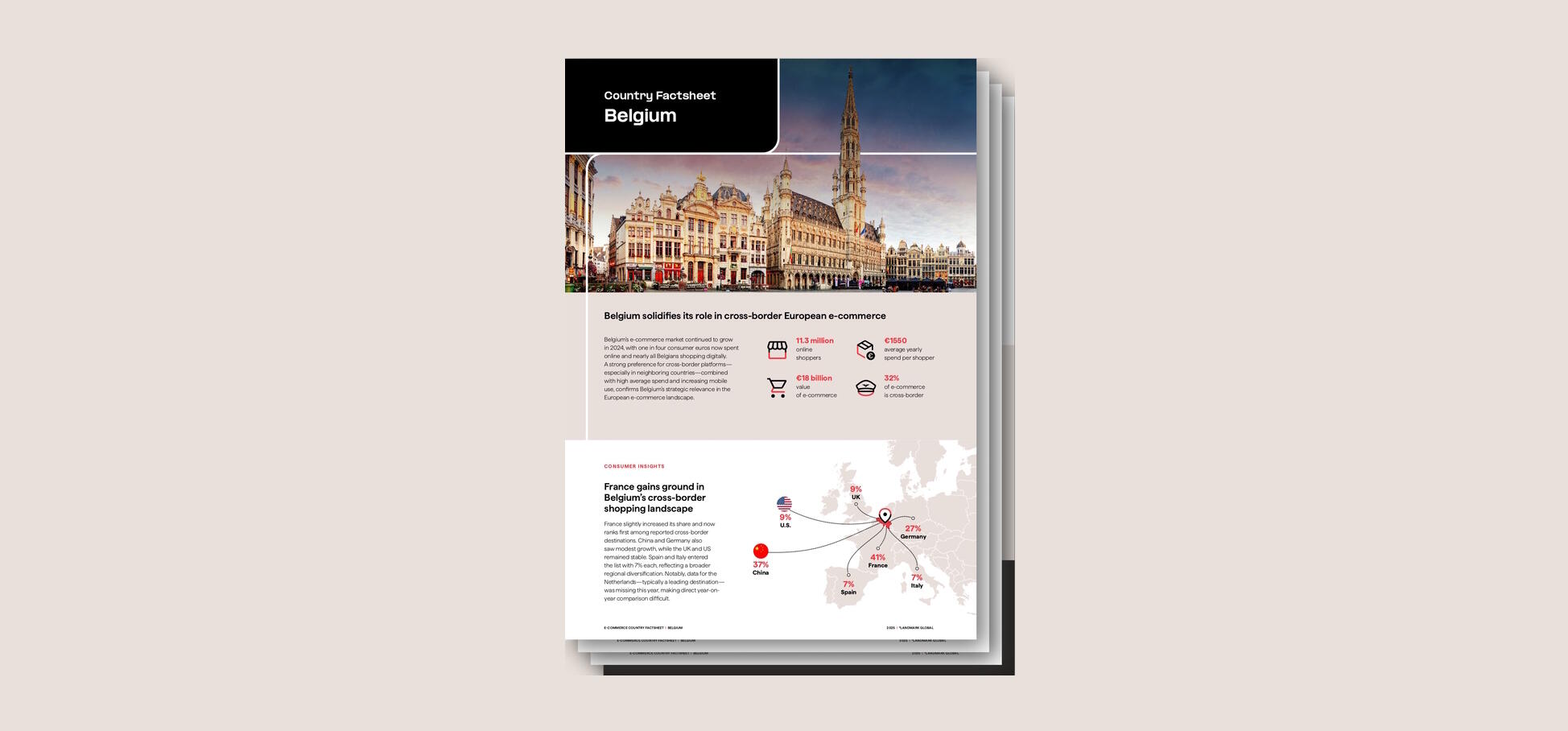
Belgium commands a surprisingly strong presence in online retail, with cross-border shopping accounting for nearly a third (32%) of all transactions. Mobile purchasing leads the market, doorstep delivery remains the standard, and clear shipping fees are the top requirement for shoppers.
Check out our Factsheet to discover strategies for capturing Belgian consumers.
FAQ
-
The primary driver for Belgian cross-border shoppers is access to a wider range of products and brands (48%). Other equally important motivations include fast delivery speed (34%), low product prices (33%), reliable delivery (33%), and easy-to-find products (33%). Currently, the most popular cross-border categories are clothing and footwear (40%), followed by home and garden (16%) and consumer electronics (16%).
-
Sustainability plays a major role in shaping purchasing decisions in Belgium. A significant 77% of shoppers already recycle parcel packaging, and 76% prefer retailers to use recyclable packaging materials. Additionally, 66% dislike overpackaged parcels, and 67% express a willingness to delay their delivery if it helps reduce the environmental footprint of their order.