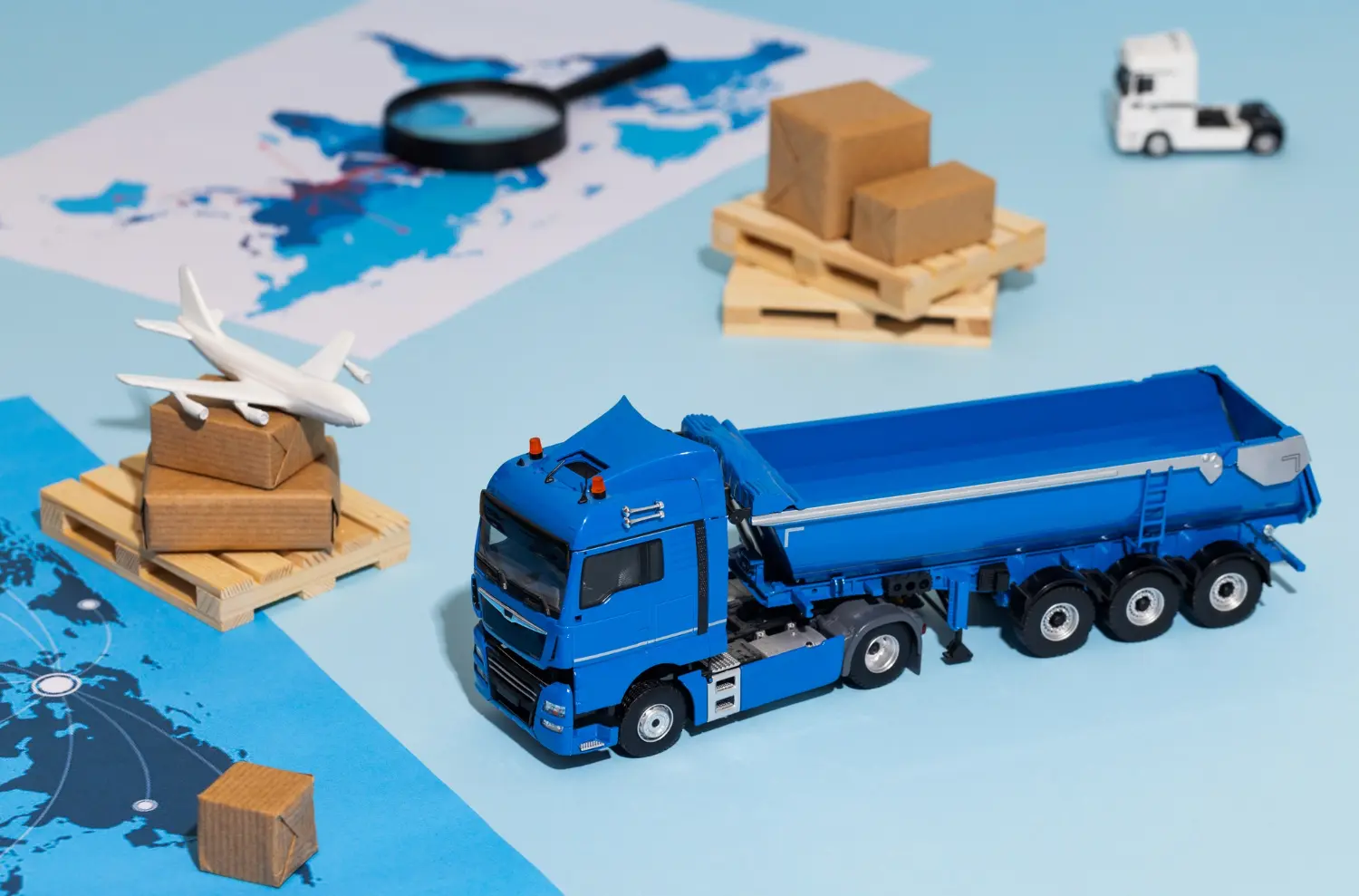
Shipping to Switzerland: Mastering Non-EU Customs for UK E-commerce
Key Takeaways
- Third-Country Rules: Although Switzerland is not in the EU or the UK customs union, it still requires full export documentation for every parcel.
- The "Admin Trap": Unpaid VAT results in high carrier handling fees charged to the customer, which is the #1 cause of rejected deliveries.
- DDP is Essential: Using "Delivered Duty Paid" (DDP) is the only way to guarantee a seamless customer experience comparable to domestic shopping.
- Data Over Description: Vague product descriptions are no longer accepted by Swiss digital customs; precise HS codes are mandatory.
For many UK retailers and e-commerce brands, Switzerland represents a lucrative paradox. Geographically, it is a close neighbor; economically, it boasts one of the highest purchasing powers in Europe; and culturally, there is a strong appetite for British brands. Yet, logistically, it remains an island.
Since the UK left the EU, British businesses have become accustomed to customs forms. However, shipping to Switzerland presents distinct challenges compared with shipping to the EU. As Switzerland is not part of the European Union's customs union (nor the UK's), sending a parcel from Manchester to Geneva involves the same legal complexity as shipping to Tokyo or New York, but with even stricter enforcement.
As we move through 2026, the tolerance for "paperwork errors" at the Swiss border has effectively vanished. The Swiss Federal Office for Customs and Border Security has fully digitized its processes (via the Passar system), meaning compliance is mandatory, not optional. For retailers in the UK, the Swiss border represents a unique challenge where high reward meets high complexity.
In this guide, we explore how to master parcel delivery to Switzerland and turn this complex market into a reliable revenue stream.
1. The Export Reality: Data is the New Currency
The first mindset shift required of UK sellers is to recognize that proximity does not equate to simplicity. Even though the flight time is short, you are performing a full international export.
In 2026, physical paperwork is secondary to digital data. Every commercial shipment must be accompanied by a commercial invoice and, crucially, accurate electronic customs data. Successful parcel delivery to Switzerland relies entirely on the integrity of your electronic customs data, not just the label on the box.
If the digital data transmitted by your carrier does not match the physical goods, or if fields are missing, the truck stops. To ensure flow, you must provide:
- Exact Value: The transaction value of the goods (zero-value "samples" are heavily scrutinized).
- HS Codes: The correct Harmonized System code for every SKU.
- Country of Origin: Essential for determining if preferential duty rates apply under UK-Swiss trade agreements.
Managing this data requires robust systems. Read our case study about Cross-Border Logistics to know more.
2. The Cost of Entry: VAT and the "Admin Trap"
One of the most common friction points for Swiss consumers buying from the UK is the "shock" of the delivery cost. While Switzerland generally has low duty rates on industrial goods, Import VAT is strictly applied.
As of January 1, 2026, the standard Swiss VAT rate is 8.1% (with a reduced rate of 2.6% for goods like books and food). While this is much lower than the UK's 20% VAT, the method of collection is the problem.
The Administrative Nightmare:
If you ship a parcel without prepaying taxes, the carrier (e.g., Swiss Post) must stop the package, calculate the tax, and collect it from the recipient. They charge a "disbursement fee" or "handling fee" for this service. It is not just the tax itself that causes friction, but also the administrative fees carriers charge to collect it from your customer.
Often, for a small order (e.g., a £40 t-shirt), the tax might be small, but the handling fee could be £15-£20. This leads to angry customers and a high rate of "Refused on Delivery" returns, which kills your profit margin.
3. Incoterms: The Strategic Choice (DAP vs DDP)
This brings us to the most critical strategic decision for your checkout page: choosing between DAP (Delivered at Place) and DDP (Delivered Duty Paid).
The Risk of DAP:
When you ship under DAP Incoterms, you pay for shipping, but you transfer the customs liability to your customer. They must pay the VAT and the carrier's admin fee at the doorstep before receiving the parcel. While this option seems cheaper for you up front, it is risky for customer retention, as Swiss buyers are savvy and dislike paying the postman at the door.
The Solution: DDP:
To succeed in the Swiss market in 2026, we strongly recommend implementing a Delivered Duty Paid (DDP) solution. This means you calculate and collect Swiss VAT (8.1%) at checkout and pay it directly to the authorities through your logistics partner.
- The customer pays one final price (no hidden fees).
- The parcel passes through customs via the "Green Lane" because taxes are prepaid.
- The customer experience mimics a domestic delivery.
Understanding the impact of Incoterms is vital for all international trade. Check out our guide, "What Are Incoterms?" to see how they affect your bottom line.
4. Mastering Swiss Digital Clearance
In 2026, Swiss customs clearance is a digital-first environment. The authorities utilize advanced risk-assessment algorithms to scan incoming data before the freight even arrives at the border.
This means your "Item Description" cannot be vague. In 2026, generic terms like 'Gifts', 'Clothing', or 'Parts' are automatic red flags that will stall your shipment at the border. You must use precise descriptions, such as "Men's Cotton Shirt" or "Ceramic Coffee Mug."
Merchants who use AI tools to classify their catalogues with precise HS codes accurately will benefit from faster clearance times. This precision helps you leverage the UK-Switzerland trade agreement, potentially reducing duties to zero on qualifying UK-made goods.
Summary: Respecting the Border
Switzerland is a lucrative market that rewards quality and reliability but penalizes negligence. Treating Switzerland as "just another European country" is a strategic error. However, if you follow the procedures, manage your export data rigorously, calculate Swiss Import VAT upfront, and choose the right partner for parcel delivery to Switzerland, you can unlock access to an affluent population hungry for UK products.
At Landmark Global, we specialize in bridging the gap between the UK and Switzerland, managing the border complexity so your customers never have to feel it.
For more insights on optimizing your international reach, explore our article, ”Choosing a courier for E-commerce."
-
Switzerland effectively applies a tax threshold based on the amount of tax due, not just the shipment value. Generally, if the calculated VAT amount is less than 5 CHF, it is waived, and the parcel enters duty-free. However, because shipping costs are included in the taxable value (CIF value), even small e-commerce orders often exceed this limit, triggering tax and admin fees.
-
This is almost certainly the carrier's clearance/handling fee. When shipping to Switzerland under DAP terms (where the customer pays duties), the airline charges a fee (often 10-20 CHF) just for the administrative work of collecting the VAT from the recipient. Using DDP (Delivered Duty Paid) eliminates this fee for your customer.
-
Not necessarily for small volumes. You need a UK EORI number to export. However, if you ship significant volumes (globally generating over 100,000 CHF in turnover from small consignments), you may be required to register for Swiss VAT and become a "fiscal representative." Most small to medium sellers rely on their logistics provider's clearance infrastructure to manage this.