Top 10 Essential Facts About E-Commerce in France in 2026
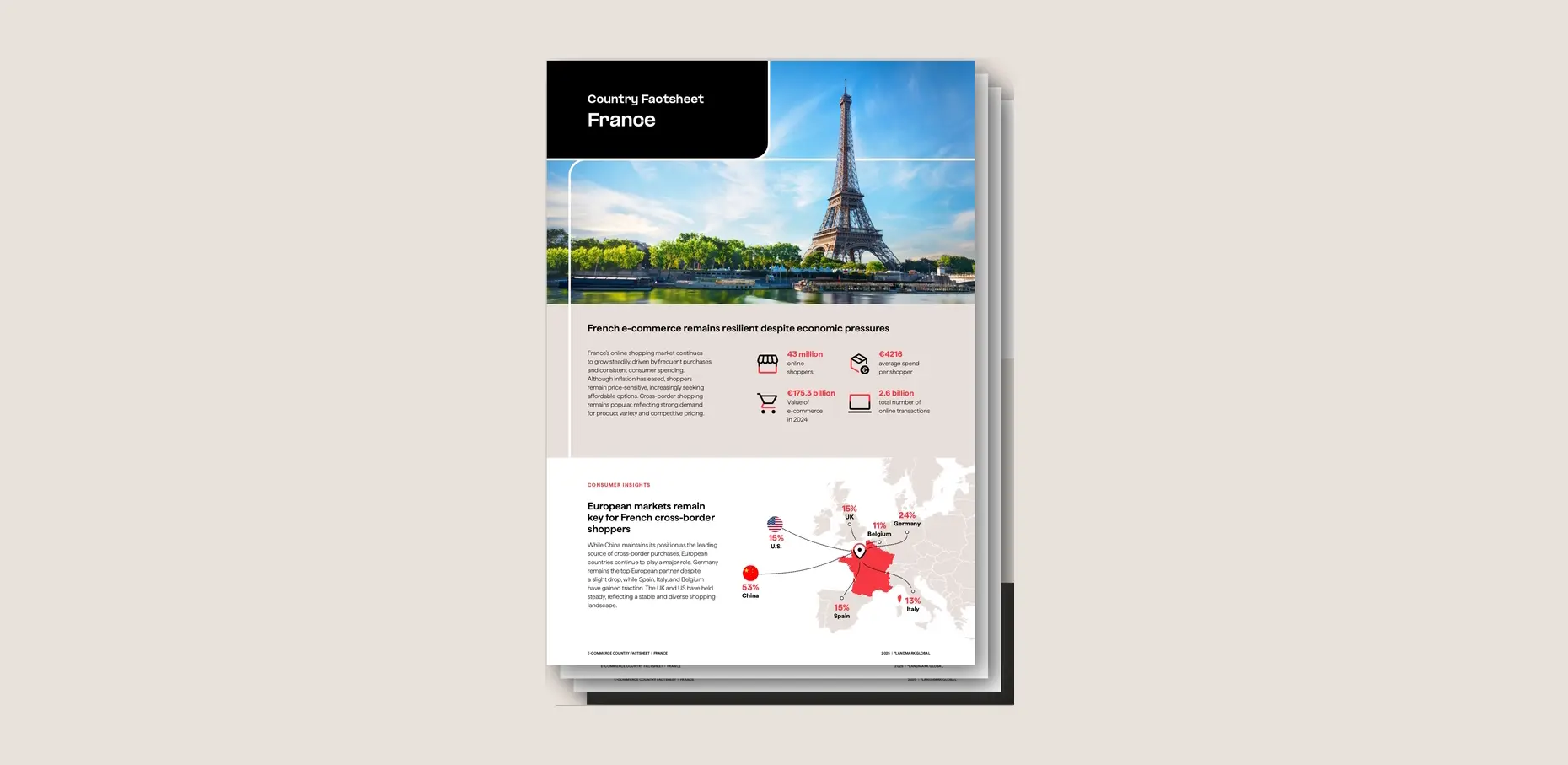
France’s e-commerce market is a cornerstone of Europe’s digital economy, driven by 43 million online shoppers and a robust appetite for cross-border purchases. Despite economic pressures, French consumers are spending more, prioritizing variety, and demanding sustainability.
Here are the top 10 essential facts about e-commerce in France in 2026 that retailers must understand in order to thrive.
Key Points:
- France remains one of Europe’s most resilient e-commerce markets in 2026.
- Cross-border shopping is now a standard behaviour among French consumers. Product variety, availability, and unique brands outweigh pure price advantages.
- Logistics, sustainability, and transparency define success in France. Shoppers expect clear delivery costs, real-time tracking, and flexible fulfilment options.
1. E-Commerce Market Shows Resilient Growth
France boasts 43 million online shoppers, each spending an average of €4,216 annually, contributing to a market valued at €175.3 billion with 2.6 billion transactions. Despite easing inflation, price sensitivity persists, pushing consumers toward value-driven options.
E-commerce sales in France are expected to exceed €200 billion by 2026, reflecting continued strong adoption and growth driven by volume rather than price inflation easing. France remains one of Europe’s largest e-commerce markets with robust mobile and cross-border channels.
Mobile commerce, accounting for 70% of fashion e-commerce sales, and digital wallet adoption are key drivers.
2. Cross-Border Shopping Remains Popular
French consumers frequently shop internationally, with China (53%) leading cross-border purchases, followed by
- Germany (24%),
- Spain (15%),
- United Kingdom (15%),
- United States (15%),
- Italy (13%),
- Belgium (11%).
Cross-border e-commerce is growing globally, and European consumers — including French shoppers — increasingly value variety, better prices, and unique products when buying internationally. 59% of global online shoppers now buy from retailers outside their home country, showing broader cross-border momentum
3. Clothing and Footwear Lead Cross-Border Purchases
Clothing and footwear (42%) dominate cross-border shopping, followed by consumer electronics (18%), home and garden products (17%), sports, leisure, and hobbies (13%), toys (10%), and household appliances (10%). Fevad notes fashion accounted for 56% of online purchases in 2023, with platforms like Vinted and Shein driving growth. Coherent Market Insights projects the fashion e-commerce market to reach €56.36 billion by 2032, with a CAGR of 13.2%, fueled by social media influencers and second-hand marketplaces.
4. Product Variety Drives Cross-Border Shopping
French shoppers prioritize more choice of products and brands (45%), followed by reliable delivery (36%), fast delivery speed (34%), ease of finding products (31%), cheap delivery costs (30%), and low product prices (26%).
Social commerce via Instagram and TikTok drives 32% higher sales for brands with strong social presence.
5. Mid-Weight Parcels Are on the Rise
French consumers receive fewer ultra-light parcels (less than 0.5 kg: 33%) and more in the 0.6–2 kg range (48%), with heavier parcels (2–5 kg: 9%, over 5 kg: 6%) stable. This aligns with increased purchases of electronics and home goods.
France’s road express delivery market, valued at €43 billion, handles over 400 million parcels annually.
Did you know?
In 2025, French consumers made over 2.6 billion online transactions, spending an average of €4,216 per shopper — and nearly half of all cross-border purchases were worth more than €50. The French e-commerce market is booming, and cross-border sellers have more opportunity than ever.
Explore the latest facts, figures, and survey results on e-commerce in France. Download our free PDF factsheet and get the essential data you need to launch, grow, and thrive in the French market.

Opportunities and Challenges
6. High-Value Orders Are Growing
French shoppers are spending more, with 47% of cross-border orders exceeding €50, while mid-range orders (€25–€49: 27%) dip, and low-cost segments (less than €10: 6%, €10–€24: 20%) remain stable. Statista projects that online retail will account for 21% of France’s retail market by 2028, driven by higher-value purchases.
7. Home Delivery Dominates, but Pickup Points Gain Traction
Home delivery leads (mailbox: 69%, at the door: 53%), but courier parcel shops (57%), parcel lockers (27%), post offices (21%), and e-retailer physical stores (20%) are gaining popularity.
8. Delivery Cost Transparency Is Critical
French consumers prioritize pre-purchase information about delivery charges (66%), followed by selecting delivery location (60%), free delivery above a certain value (54%), simple and reliable returns (54%), and confidence in the delivery company (53%).
9. Parcel Tracking Is Essential
84% of French shoppers actively follow parcels via tracking notifications. Pitney Bowes reports that 65% prefer SMS or app-based notifications, with couriers like Colissimo enhancing satisfaction through robust tracking. Ecommerce Europe notes that France’s advanced logistics ecosystem, supported by DHL, Chronopost, and La Poste, ensures reliable tracking, critical for cross-border purchases. Investments in AI-driven logistics are improving delivery visibility.
10. Sustainability Shapes Consumer Choices
Sustainability is paramount, with 60% willing to delay delivery for lower environmental impact, 67% preferring reusable packaging, 47% favoring recyclable materials, and 48% disliking overpackaging.
The Takeaway - French E-commerce
To succeed in France’s thriving e-commerce market in 2026, retailers must align with consumer priorities. Offering value-driven products with transparent pricing will attract price-sensitive shoppers, while optimizing cross-border logistics and stocking diverse products, especially in fashion and electronics, will meet variety demands. Retailers should focus on mid-range and high-value items, streamline packaging for mid-weight orders, and provide flexible delivery options like parcel lockers and click-and-collect. Clear delivery cost communication, robust parcel tracking to satisfy the 84% tracking demand, and sustainable practices like reusable packaging will build trust and appeal to eco-conscious consumers. By leveraging these strategies, retailers can capture France’s €175 billion e-commerce market and drive growth.
-
Yes. France’s e-commerce market continues to grow steadily in 2026, with total sales expected to exceed €200 billion. Growth is driven by higher transaction volumes, mobile commerce adoption, and increased cross-border activity rather than inflation-led price increases.
-
French shoppers buy cross-border mainly for greater product choice, access to exclusive brands, and better availability. Price is important, but variety, reliability, and delivery experience are now stronger decision factors. This makes logistics and localisation critical for international sellers.
-
Clothing and footwear lead cross-border purchases, followed by consumer electronics and home & garden products. Social commerce and second-hand platforms strongly support fashion growth. Electronics benefit from bundled orders and higher average basket values.
-
Transparent delivery costs, parcel tracking, and flexible delivery locations are essential. Home delivery remains dominant, but parcel lockers and pickup points are gaining popularity. Sustainability and packaging optimisation increasingly influence delivery choices.