[July Returns Series]: Why Your Returns Strategy Matters More Than Ever
Key points:
- Returns are now a core part of the customer journey, not an afterthought—100% of online shoppers have returned at least one item, and reverse logistics is becoming a trillion-dollar industry by 2029.
- Consumers demand fast, simple and flexible returns, with 67% prioritising rapid refunds and 84% preferring box-free, label-free experiences supported by dense PUDO networks across Europe.
- Retailers face rising complexity and costs, including fraud, wardrobing, bracketing and operational challenges—leading many brands to shorten return windows, introduce fees and shift toward personalised, behaviour-based return policies.
- E-logistics partners like Landmark Global play an essential role, offering branded portals, full tracking, 154,000+ drop-off points, flexible routing, consolidation, customs handling and value-added services to help retailers turn returns into a competitive advantage.
Returns aren’t just a consequence of online shopping, they are a pivotal part of the customer experience.
And what better time to talk about them than July, a peak season for summer sales and post-purchase... change of heart. With millions of items bought (and returned) this month, there’s no escaping the returns conversation.
Anastasia Heaslewood is Product Manager at Landmark Global, where she specializes in e-commerce logistics and return solutions across international markets. She works closely with brands to design scalable, customer-first return strategies that drive retention and growth.
Q: Why are returns more important than ever in the current e-commerce landscape?
A: Returns have become an unavoidable reality in e-commerce. In fact, 100% of online shoppers report having returned an item at least once. Evidently, returns aren't a fringe activity anymore but a central part of the shopper journey.
According to the National Retail Federation (NRF), the total value of retail returns in 2024 hit $890 billion, representing 16.9% of all retail sales. Online returns are even higher, exceeding in-store returns by 21% on average. The global reverse logistics market is expected to grow to $954.5 billion by 2029.
...and this summer’s shopping rush will only add to that volume, putting more pressure on retailers to get their return processes right.
Q: What do consumers really expect from a returns experience today?
A: Today’s consumers expect speed, simplicity, and transparency:
- 67% say a fast refund process is the most important aspect
- 84% prefer box-free, label-free options
- 63% of U.S. consumers say they shop more frequently with brands offering easy returns
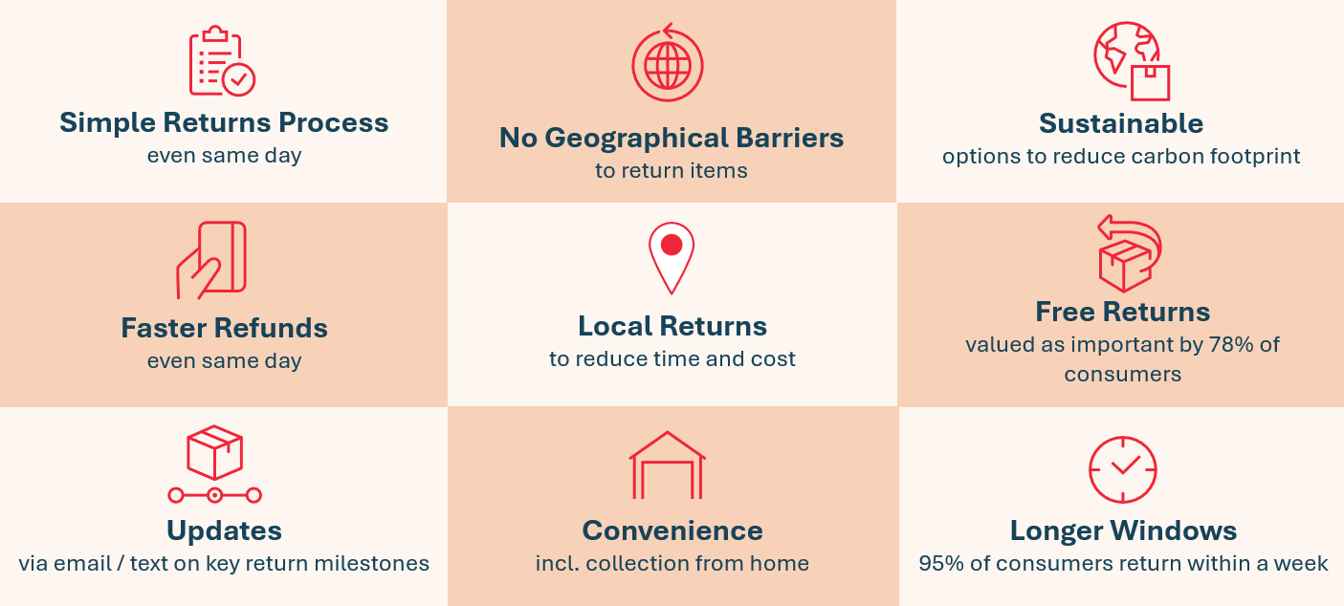
Convenience now means offering multiple return options: home pickup, parcel lockers, post offices, and retail drop-offs.
Across Europe, PUDO networks are expanding fast: in Spain and Portugal, 90% of the population now lives within 3km of a drop-off point.
Returns should be as frictionless as buying. If it’s a pain, they won’t come back.
Q: What are the key challenges retailers face when managing returns?
A: Returns are complex and costly. The operational burden includes repackaging, restocking, fraud prevention and sustainability concerns. In the U.S. alone, return abuse and fraud cost retailers over $100 billion in 2023.
On the one hand, younger consumers are also reshaping behavior:
- 43% of Gen Z shoppers engage in wardrobing —buying items to wear once before returning
- 51% of Gen Z and Millennials bracket purchases (buy multiple sizes with intent to return some)
On the other hand, retailers are responding:
- 66% now charge for at least one type of return
- Companies like Asos have introduced return fees for frequent returners
- Zalando cut its return window from 100 to 30 days in key markets
Retailers are no longer treating all customers equally. The future lies in personalized return policies based on behavior and trust.
Q: How can e-logistics partners help e-tailers solve the returns puzzle?
A: An effective returns strategy requires a logistics partner that can scale with your brand and offer both flexibility and control. At Landmark Global, we don't just move parcels, we help retailers optimize the entire reverse journey. It’s about protecting margins while delighting your customer.
And as July returns spike across the industry, we know this is just the beginning.
So, stay tuned! We’ll soon have more to share around smarter, faster, more flexible returns.
Landmark Global helps you turn returns into an advantage, by offering you:
- Branded Returns Portal: A fully customizable interface tailored to your brand
- 154,000+ drop-off points worldwide near your consumers’ homes or workplaces
- Full end-to-end tracking and real-time reporting
- Local consolidation to reduce shipping costs and carbon footprint
- Flexible scheduling for returns processing and transport
- In-house customs clearance to handle all data safely, tax and duty-free with T&Cs
- Optional value-added services, including grading, repacking, or donating non-resellable items
And much returns management solutions:
- Customer-friendly solutions: for greater customer satisfaction
- Convenient locations: Access to over 64,000 collection points and post offices across Europe
- Competitive prices: Cost-effective reverse logistics solutions with no compromise on service quality
- Choice of solution: dynamic routing via postal flows or our carrier network combined with international or local (in-country) returns to choose the most suitable option
- Speedy refunds: Efficient shipping and processing ensure faster refunds.
Q: What makes a 'best-in-class' returns policy?
A: A strong policy is:
- Clear: No hidden fees or confusing instructions
- Convenient: Multiple return methods (home pickup, locker, store, post)
- Fair: Generous but sustainable, with smart limits
- Fast: Especially on refunds and replacements
In 2025, speed and clarity are non-negotiable. 67% of shoppers say fast refunds are essential while 56% cite fast returns processing. Tools like Landmark Global’s branded portal and tracking services support these expectations.
Preventing avoidable returns can start even earlier in the customer journey. Tools such as SelfServe let shoppers correct details like product variants or shipping addresses after checkout, before fulfilment begins, helping resolve simple order mistakes before they turn into returns.

Final Word
Returns aren’t a back-office problem anymore. They’re a front-line experience that can either build loyalty or break it. With the right technology and partnerships, returns can become a growth lever instead of a cost center.
And with peak returns season kicking off... today, now’s the perfect time to rethink how you manage them.
Let’s just say it won’t be the last time we talk about returns this summer.
About the Expert
Anastasia Heaslewood is Product Manager at Landmark Global, where she specializes in e-commerce logistics and return solutions across international markets. She works closely with brands to design scalable, customer-first return strategies that drive retention and growth.
You may also read:
- [July Returns Series]: Returns Done Right - Lessons from Five Standout E-tailers
- [July Returns Series]: Wardrobing, Bracketing, Serial Returners - How Retailers Are Responding
- [July Returns Series]: Generational Dynamics in eCommerce Returns - How Age Shapes Behaviors and Policies
- [July Returns Series]: Luxury Industry Logistics - Navigating July's Challenges in E-Commerce
FAQ
-
Because returns are now universal—every online shopper has returned something—and they represent nearly 17% of all retail sales. With reverse logistics expected to reach nearly $1 trillion, efficient returns are crucial for customer satisfaction and profitability.
-
Speed and convenience. Shoppers want fast refunds, multiple return options (home pickup, lockers, stores, post offices), and frictionless processes such as label-free and box-free returns.
-
High costs, fraud and abuse (wardrobing, bracketing), repackaging, sustainability concerns, and rising expectations from younger generations. Many retailers now charge return fees, restrict frequent returners, or shorten return windows to reduce pressure.
-
By offering scalable, data-driven reverse logistics solutions: branded return portals, global drop-off networks, full tracking, consolidation to reduce costs, customs clearance, and added services like grading and repacking to maximise value recovery and customer satisfaction.