Postcard from Deliver 2025: What’s Next for Cross-Border E‑Commerce
Key points:
- Cross-border e-commerce is now a core strategy, not an add-on, with one-third of European online orders already crossing borders and shoppers expecting local-level service regardless of origin.
- AI and automation are accelerating logistics, but the real focus is on reducing friction—customers should never feel the complexity behind fulfilment, routing or returns.
- Sustainability has become a competitive differentiator, with greener delivery options, recycled packaging and carbon-neutral commitments shaping future-ready logistics strategies.
- Market-specific expertise is key to success, as understanding expectations in individual countries (returns in Germany, shopper behaviour in Spain, VAT rules in Canada) directly impacts cross-border performance.
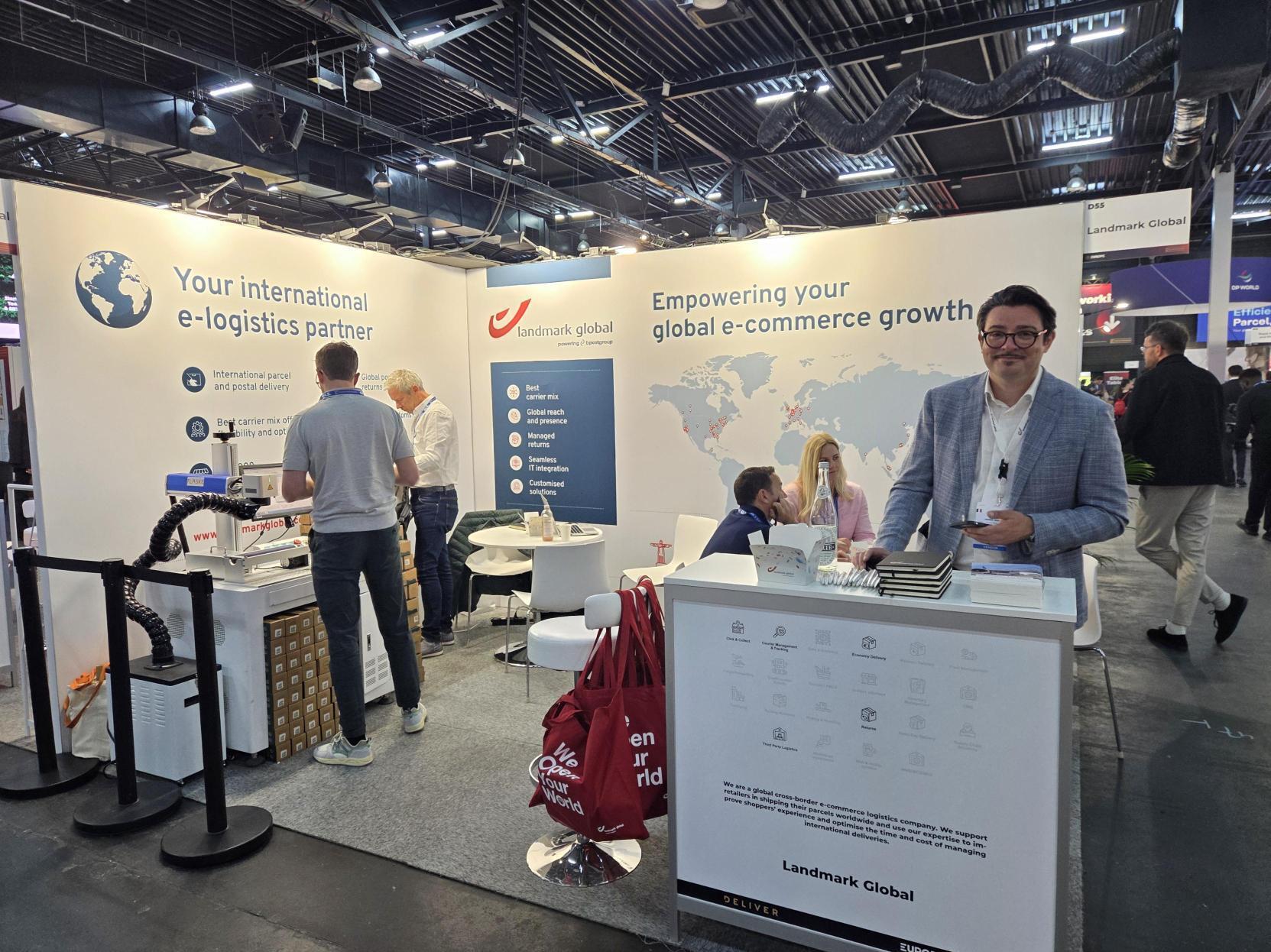
Earlier this month, I spent two full days at Deliver Europe 2025 in Amsterdam—and wow, did it deliver. The 10th edition brought together over 1,100 e-commerce and logistics folks under one roof (Taets Art and Event Park, which was gorgeous btw). Picture serious brands and a whole lot of ideas flying across stands, panels and coffee queues ☕.
This year hit differently
I’ve been to a few events by now, but this one? It had momentum. The conversations weren’t just about shipping boxes. They were about doing e-commerce smarter, especially across borders. Here’s what really stood out for me:
Cross-border isn’t “nice to have” anymore, it’s the strategy
With European e-commerce set to hit €530 billion this year, a third of orders are crossing borders. And the bar? Higher than ever. Local-level service is expected, no matter where the parcel comes from. You need smart carriers, flexible routing, and real market know-how. Spoiler: this is our playground at Landmark Global.
AI and automation are here to stay, but it’s still about people
Automation popped up everywhere: returns, fulfillment, customer service. But the real takeaway? It’s not just about speed. It’s about removing friction. One speaker nailed it:
Automation isn’t about robots, it’s about making sure customers never feel the complexity
Sustainability is not a side quest, it’s a differentiator
From greener delivery options to recycled packaging, logistics players are finally putting their (carbon-neutral) money where their mouth is. Deliver itself was fully carbon-offset, and the vibe was clear: sustainable = future-proof.

What I’m Taking Home
Here’s the thing: succeeding across borders isn’t about massive volumes or flashy tech. It’s about knowing your market. What do shoppers expect in Spain? How do returns work in Germany? What’s the VAT situation in Canada? These details matter.
It also reinforced what I love most about what we do at Landmark Global: we’re not just moving parcels, we’re helping brands grow. With no nasty surprises, no hidden fees, and a team that genuinely loves solving messy logistics puzzles (yes, that’s a thing).
**
Couldn’t make it to Deliver this year? Want to chat trends or trading across borders? Slide into my inbox. My team and I would love to help.
You may also read:
-
Because the European market is expected to reach €530 billion, and around one-third of all orders already cross borders. Retailers must provide consistent, reliable service internationally to stay competitive.
-
AI is supporting automation in returns, fulfilment and customer service. However, the central message was that automation should remove friction—not replace people—ensuring seamless experiences for customers.
-
Sustainability is no longer optional. Greener delivery methods, recycled packaging and carbon-offset initiatives are becoming essential for brands aiming to stand out and prepare for the future.
-
Success across borders relies on deep market knowledge and smart logistics partners. Understanding regional expectations and complexities is crucial for growth—more than flashy tech or sheer shipping volume.
Joelle Taylor